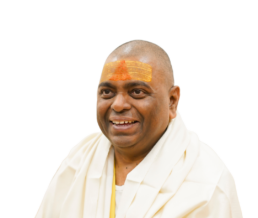
Bharat Gaurav Shri Shri 1008 Mahamandaleshwar Shri Karauli Shankar Das Ji Maharaj - Spiritual
In the vast spiritual landscape of India, where ancient wisdom meets evolving human consciousness, the presence of Shri Shri 1008 Mahamandaleshwar Shri Karauli Shankar Das Ji Maharaj stands as a profound force of transformation. Revered as a Poorna Guru—a perfect living master—he is known for his rare ability to guide individuals beyond the cycles of Smriti (deep-rooted memory impressions) and karmic imprints, which are considered the fundamental causes of human suffering.
Born as Santosh Singh Bhadoriya on 4th August 1964 in Kanpur, Uttar Pradesh, his spiritual inclination was evident from an early age. As a child, he was naturally drawn toward Dhyana (meditation) and Kundalini Sadhana, reflecting an innate connection with higher consciousness. This early awakening laid the foundation for a lifelong journey dedicated to understanding and transforming the human experience through ancient Indian wisdom.
Under the divine guidance of Pandit Shri Radha Raman Ji Mishra (Baba Ji) and Guru Mata Maa Kamakhya Ji, he was initiated into deeper spiritual disciplines. Following his Sanyas Diksha, he embraced the spiritual name Shri Karauli Shankar, marking the beginning of a higher path of renunciation and service. Over time, he rose to become the Tritiya Mathadhipati of Mishri Math, Haridwar, and was appointed as Mahamandaleshwar of Shri Panchayati Akhada Naya Udaseen (Nirvan), Kankhal, Haridwar—positions that reflect both spiritual authority and deep-rooted tradition.
At the heart of his work lies the establishment of Shri Karauli Shankar Mahadev Purvaj Mukti Dham in 2001, located in Gram Karauli, Kanpur. This sacred center serves as a powerful space for spiritual transformation, where seekers engage in ancient Vedic practices such as Yajna, Rudrabhishek, and Maa Mahakali Abhishek, along with advanced disciplines like Tantra Kriya Yog, meditation, and Kundalini awakening.
One of his most significant contributions to spiritual science is the concept of Smriti Mahavigyan. According to this profound understanding, all forms of suffering—physical, mental, emotional, social, and spiritual—originate from accumulated Smritis, or memory impressions, that travel across generations through one’s energy pathways. Through this lens, he presents a unique integration of ancient Vedic knowledge with a structured, experiential, and almost scientific approach to healing and transformation.
His teachings emphasize Sankalp Shakti—the power of conscious intention—and Pitra Mukti, a process aimed at liberating ancestral imprints. Through guided practices such as Dhyan Sadhana and Vedic rituals, individuals are empowered to dissolve these deep-seated patterns, leading to holistic well-being. Followers and disciples have reported relief from a wide range of challenges, including physical ailments, psychological distress, social and relational issues, financial struggles, and spiritual unrest, by adopting these disciplined practices.
The spiritual ecosystem he has created is both inclusive and structured. Programmes such as the One Day Anushthan, featuring sacred rituals like Shri Dasa Mahavidya Havan and Maha Mrityunjay Havan, offer focused avenues for healing. Mass Diksha initiatives, including Pancha Mahabhuta Shuddhi and Mantra Diksha, further expand access to spiritual empowerment. The Anand Darbar, a no-cost open shivir, reflects his commitment to accessibility—allowing individuals from all walks of life to experience transformation through their own Sankalp Shakti and meditative practices under the guidance of a Poorna Guru.
For dedicated seekers, the path of Tantra Kriya Yog Sadhana unfolds across 21 levels, guiding them toward enlightenment through disciplined progression. Advanced practitioners gather at the Sadhak Mahasammelan, a three-day immersive experience of deep meditation and Kundalini practices. Specialised initiatives like the Zero Balanceprogramme address the needs of working individuals, while the Memory Purification Programme (MP2) focuses on nurturing young minds aged 7 to 18, helping them overcome negative impressions and unlock their intellectual and emotional potential.
Beyond spiritual teachings, Shri Karauli Shankar Ji’s work reflects a deep commitment to societal upliftment. His philosophy strongly opposes superstition and spiritual discrimination, particularly against women, while promoting equality, dignity, and the timeless Four Ashram Parampara. Rooted in the belief of Manav Dharma and Vasudev Kutumbakam, his vision transcends boundaries, uniting humanity through shared spiritual values.
His humanitarian initiatives further embody this vision. Through the Annapurna Kitchen, thousands receive daily prasadam, ensuring nourishment and dignity for all. The Amrit Jal Seva has transformed lives in remote villages by providing access to clean drinking water. Initiatives like Amrit Kanyadaan and Amrit Vastra Yojana extend support to underprivileged communities, bringing hope, warmth, and dignity to countless lives.
Recognized by international platforms such as The European Centre for Peace and Development, his work bridges the gap between ancient spiritual traditions and modern scientific inquiry. His approach emphasizes that true transformation is governed not by miracles, but by the laws of nature, accessed through disciplined practice and inner awakening.
With a mission to create a disease-free, grief-free, fear-free, and delusion-free humanity, Shri Karauli Shankar Das Ji Maharaj continues to guide millions toward self-realization. His life and work stand as a testament to the enduring power of ancient Indian wisdom—reimagined for the modern world, yet rooted deeply in timeless truth.

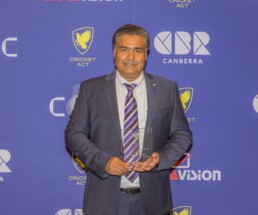
Bharat Gaurav Mr. Sanjay Sharma Multicultural Cricket Ambassador Australia
Sanjay Sharma is a distinguished community leader, educator, and Multicultural Cricket Ambassador appointed by Cricket Australia. Based in Canberra, he is the Founder and Director of the Indian Australian Multicultural Sports Association (IAMSA) and the Founder of Yerrabi District Cricket Club (YDCC). Through his leadership, he has played a pivotal role in using sport as a platform to promote inclusion, cultural harmony, and community engagement.
A passionate advocate for multiculturalism, Sanjay has successfully organised numerous high-impact events, including the Multicultural Cup at Manuka Oval, which brings together diverse communities and celebrates unity through cricket. His initiatives have created opportunities for youth, women, and underrepresented groups, including programs supporting Afghan girls and grassroots junior cricket development.
Beyond sport, Sanjay has made significant contributions to community welfare, organising free health and physiotherapy sessions, supporting families during bushfires and COVID-19, and raising funds for charitable causes such as the McGrath Breast Cancer Foundation.
Professionally, he is a dedicated mathematics teacher at a government college in Canberra, where he continues to inspire and mentor students.
Sanjay’s contributions have been widely recognised with several prestigious honours, including the Cricket Australia National Volunteer Award (Inclusion & Diversity), ACT Outstanding Support to Sport Award, Canberra Individual Champion Award, and multiple community leadership accolades.
He remains deeply committed to strengthening community connections and empowering future generations through sport, education, and service.
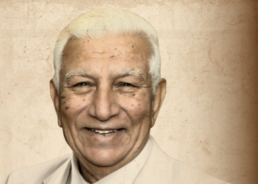
Bharat Gaurav Late Mr. Nirmal Kumar Jain (Sethi)
Nirmal Kumar Jain Sethi was a prominent Indian Jain leader, social reformer, and cultural preservationist known for his lifelong dedication to Jain Dharma and community service.
He served as the National President of the Shri Bharatvarshiya Digambar Jain Mahasabha for over 40 years (1981–2021), making him one of the longest-serving and most influential figures in the organisation’s history. During his leadership, he transformed the Mahasabha into a strong platform for religious, cultural, and social revival.
In simple terms, he was:
- A guardian of Jain heritage – He led the restoration of 700+ ancient Jain temples across India.
- A visionary leader – He created multiple institutions (Navratna initiatives) for youth, women, education, and cultural preservation.
- A global cultural ambassador – He travelled worldwide to trace and promote Jain history and heritage.
- An education supporter – He promoted Jain studies, research, scholarships, and publications.
- A deeply spiritual व्यक्ति – He followed Jain principles strictly in his daily life and believed in seva (service) as the highest duty.
He passed away on 27 April 2021, and in recognition of his contributions, he was honoured posthumously as Shravakaratna. His legacy continues to influence the Jain community even today.
In essence, he was not just a leader—he was someone who dedicated his entire life to preserving faith, culture, and values for future generations.
i want you to write 800 words biography only from the text i have given
Late Shri Nirmal Kumar Jain Sethi: A Life of Devotion, Leadership, and Cultural Preservation
Late Nirmal Kumar Jain Sethi, born in 1938 in Tinsukia, Assam, emerged as one of the most respected and influential figures in modern Jain history. Born into a humble family rooted in faith and values, his life journey became a remarkable bridge between ancient spiritual wisdom and modern institutional leadership. His decades of selfless service stand as a testimony to dedication, vision, and unwavering commitment to Jain Dharma.
He was born to Shri Harkchandra Jain Sethi and Smt. Sohni Devi Jain and grew up in a close-knit joint family with eight siblings. From an early age, he imbibed strong moral values and a deep sense of discipline. He pursued his education at St. Xavier’s College, Kolkata, where he completed his Bachelor of Commerce degree. However, his true calling lay not in personal advancement but in serving society and preserving the spiritual and cultural heritage of Jainism.
For over four decades, from 1981 to 2021, Shri Sethi Ji served as the National President of the Shri Bharatvarshiya Digambar Jain Mahasabha. His leadership was not merely defined by tenure but by transformation. Under his guidance, the Mahasabha evolved into a powerful force for unity, reform, and cultural resurgence. He became the very spirit of the organisation, leading it with humility, foresight, and unwavering dedication.
His contributions to society were vast and visionary. He believed that leadership was not about position but about purpose. During his tenure, he established several institutions aimed at strengthening various aspects of Jain life and community development. These included initiatives for Dharma Sanrakshan, Tirtha Sanrakshan, Shrut Sanvardhini, as well as Mahila and Yuva Mahasabhas. He also initiated platforms such as the Political Chetna Manch, Mahasabha Charitable Trust, Nirgranth Centre of Archaeology, and the Brahmi Sundari Sangeet Kala Kendra. Each of these became a pillar in the preservation and promotion of Jain culture and values.
Beyond the Mahasabha, Shri Sethi Ji held leadership positions in several important institutions. He served as President of Shri Gopal Digambar Jain Siddhant Sanskrit Mahavidyalaya in Morena and was actively involved with the Kundalpur Vaishali Teerth Kshetra Committee. He also led the Mahamastakabhishek Committee at Shravanabelagola in 2006 and later served as Chief Patron of the Bhagwan Mahavir Memorial Committee in New Delhi, along with his involvement in the Ayodhya Teerth Kshetra Committee.
Education and knowledge dissemination were central to his vision. He was a gifted thinker with a deep love for learning and played a vital role in promoting Jain education and research. He supported academic institutions and delivered lectures at universities in India and abroad, helping bring Jain philosophy into mainstream academic discourse. Jain Chairs were established at Mohanlal Sukhadia University in Udaipur and Utkal University in Bhubaneswar under his encouragement. He also promoted research by offering scholarships and supporting the publication of rare Jain texts and journals such as Jain Gazette, Prachin Teerth Jeernodhar, Shrut Samvardhini, and Jain Mahiladarsh.
One of the most remarkable aspects of his life was his dedication to Jain archaeology and heritage exploration. Shri Sethi Ji personally visited hundreds of ancient Jain pilgrimage sites across India, often accompanied by historians and archaeologists. His quest extended beyond national boundaries, as he travelled to over forty cities across America, Europe, Asia, and Africa. Through his efforts, he helped uncover and document valuable historical and cultural materials, bringing global recognition to Jain heritage.
His religious contributions were equally profound. With deep devotion, he oversaw the restoration of hundreds of Jain temples and sacred sites across the country. He believed in serving Jain saints as a sacred duty and remained committed to rituals such as Abhishek, worship, and self-study throughout his life. Even while travelling internationally, he strictly followed the core Jain principles and values, reflecting his unwavering faith and discipline.
Shri Sethi Ji also played a significant role on the global stage. He represented India at international cultural and heritage dialogue conferences, engaging with delegates from various countries including Ethiopia, Greece, Cambodia, Peru, Vietnam, and Sri Lanka. Through these engagements, he fostered cultural exchange and brought Jain Dharma into global conversations, earning recognition for his dedicated efforts.
His life came to a close on April 27, 2021, marking an irreplaceable loss to the Jain community. However, his legacy continues to inspire countless individuals. On his first death anniversary, he was posthumously honoured as “Shravakaratna,” a recognition of his lifelong service and devotion. In his memory, April 27 was declared as Jain Dharohar Diwas, ensuring that his contributions to heritage preservation are remembered and celebrated for generations to come.
Late Shri Nirmal Kumar Jain Sethi’s life stands as a beacon of humility, service, and visionary leadership. He not only preserved the past but also shaped the future of Jain Dharma, leaving behind a legacy that continues to guide and inspire.
Bharat Gaurav Prof. Dr. Nirmala S. Mourya
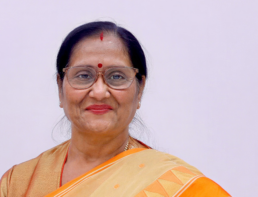
Prof. (Dr.) Nirmala S. Mourya stands as a towering figure in the field of higher education and Hindi literary scholarship, whose exemplary contributions have left an indelible mark on academia and society. A visionary leader, prolific writer, and devoted educationist, she has dedicated her life to the advancement of knowledge, the promotion of Indian languages, and the empowerment of generations through education.
Born on 5th August 1958 in Unnao (Uttar Pradesh), Prof. Mourya pursued her academic excellence at Banaras Hindu University, where she earned her Bachelor’s degree in Science, followed by a Master’s degree, Ph.D., and later a D.Litt. in Hindi Literature. Her scholarly work, particularly in the domain of Bhakti literature and comparative studies, reflects intellectual depth, originality, and a profound engagement with India’s rich literary heritage.
With an illustrious academic career spanning over 30 years, Prof. Mourya served with distinction at the Higher Education and Research Institute, Dakshin Bharat Hindi Prachar Sabha, Madras—an Institution of National Importance—where she held key positions including Professor, Head of Department, and Registrar. Her pioneering efforts significantly strengthened the foundation of Hindi education in South India, inspiring thousands of students to embrace the language as a medium of learning, livelihood, and cultural connection. At a time when Hindi learning in South India faced structural and cultural challenges, Prof. Mourya emerged as a pioneering force, dedicating her life to the promotion and popularization of Hindi as a language of opportunity and empowerment. Her efforts enabled countless students to pursue careers in government services, banking, railways, education, and administrative sectors, thereby establishing Hindi not merely as a subject, but as a viable profession and means of livelihood. Her work significantly bridged the linguistic divide between North and South India, fostering national unity through language.
An accomplished mentor and guide, she has supervised an extraordinary number of research scholars, with over 90 M.Phil., 89 Ph.D., and 6 D.Litt. degrees awarded under her guidance. Her scholarly contributions include more than 200 research papers, Elevan Edited Book and ten notable book publications encompassing novels, poetry, literary criticism, and cultural discourse, thereby enriching the corpus of Hindi literature.
Her tenure as the Vice-Chancellor of Veer Bahadur Singh Purvanchal University, Jaunpur(U.P.) (2020–2023), was marked by visionary leadership and transformative reforms. Under her stewardship, the university achieved the prestigious A+ accreditation from NAAC, implemented the National Education Policy (2020), established Centres of Excellence, strengthened research ecosystems, and introduced progressive digital and administrative innovations. Her dynamic leadership elevated the institution to new heights of academic excellence and national recognition.
Prof. Mourya has also rendered invaluable service in academic governance as a member of key statutory bodies, including the Executive Council of Uttar Pradesh Rajarshi Tandon Open University and the Academic Council of Mahatma Gandhi Chitrakoot Gramodaya Vishwavidyalaya. As a NAAC Peer Team member and academic expert, she has contributed significantly to quality assurance and policy development in higher education across India.
A distinguished ambassador of Indian language and culture, she has actively promoted Hindi at national and international platforms, including the World Hindi Conference in New York(2007). Her contributions to the translation of Tamil Sangam literature into Hindi stand as a testament to her commitment to fostering linguistic harmony and cultural integration.
In recognition of her exceptional contributions, Prof. Mourya has been the recipient of numerous prestigious honours at state, national, and international levels. These include the Hindi Ratna Award, Acharya Kshemendra Sahitya Samman, Swami Vivekananda Sharda Samman, the internationally acclaimed Pablo Neruda Award and honoured by Indian – Norwegian cultural Forum, Oslo Norway – Aug 2009 for contribution in field of Research and Comparative Study of literature. She has also been honoured by the Governor of Tamil Nadu and several eminent institutions for her outstanding achievements in education, research, and literary excellence.
Beyond her academic accomplishments, Prof. Mourya is deeply committed to social upliftment and women’s empowerment. She has tirelessly worked to support economically disadvantaged students, encourage women to resume education, and promote self-reliance through knowledge and skill development. Her compassionate and inclusive approach has transformed countless lives, reflecting her enduring commitment to nation-building.
A revered scholar, inspiring mentor, and transformative leader, Prof. (Dr.) Nirmala S. Mourya embodies the highest ideals of education, scholarship, and service. Her distinguished journey continues to inspire the academic community and stands as a beacon of excellence, dedication, and visionary leadership.

Bharat Gaurav Ms. Rita Sagrani - Healer Ayurvedic Wellness
Rita Sagrani is a distinguished entrepreneur and wellness visionary whose life’s journey reflects an extraordinary blend of heritage, enterprise, and purposeful transformation. Her story is one of resilience, reinvention, and a lifelong commitment to meaningful contribution.
Born in Alexandria, Egypt, to Indian parents, Rita was raised within a family deeply rooted in the silk trade. Her father and grandfather were respected merchants and proprietors of Bombay Bazaar, a store that served as both a business and a cultural bridge for the Indian community abroad. These early influences instilled in her a strong sense of enterprise, cultural identity, and respect for tradition.
At the age of two, Rita returned to Pune, India, with her mother to pursue an English education. She was educated at the Convent of Jesus and Mary, an institution that played a formative role in shaping her values of discipline, integrity, and quiet determination. She later trained as a school teacher and began her professional life in education, a path that nurtured her natural ability to connect with people and contribute meaningfully to their growth.
In 1969, following her marriage, Rita migrated to Australia—an experience that marked the beginning of a new chapter defined by courage and adaptability. Arriving in a new country with limited familiarity, she embraced the challenges of building a life from the ground up. After a brief period in teaching, her entrepreneurial spirit began to take form.
What began as a modest retail shop in Kings Cross, Sydney—selling Beatles shirts, incense, and fashion—soon evolved into a thriving business. Guided by intuition, creativity, and a strong work ethic, Rita expanded this single store into a network of successful retail outlets across Sydney, later extending into New Zealand and South Africa. Her ventures reflected not only commercial success but also an ability to anticipate cultural trends and connect with a diverse and evolving customer base.
This momentum culminated in the creation of Orientique, an iconic Australian fashion brand that would go on to achieve national and international recognition. Under Rita’s leadership, Orientique became known for its distinctive aesthetic and quality, with representation in over 400 stores across Australia, New Zealand, and South Africa. Over a distinguished 33-year career in the fashion industry, she built a brand and a legacy defined by vision, resilience, and entrepreneurial excellence.
Yet, beyond business success, Rita’s journey has been guided by an inner quest for deeper purpose. In a significant and courageous transition, she chose to step away from the commercial world to pursue a path aligned with holistic wellbeing and healing.
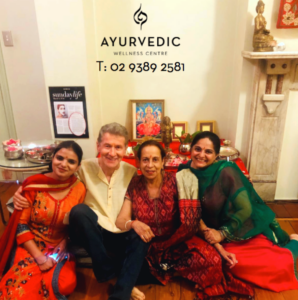
She went on to establish an Ayurvedic centre in Bondi Junction, Sydney, dedicated to offering authentic Indian Ayurvedic practices to the local community. For over 14 years, the centre has served as a sanctuary for healing, grounded in the ancient science of Ayurveda and supported by highly trained doctors and practitioners. Under Rita’s guidance, it has become a trusted and respected space, known for its integrity, authenticity, and commitment to excellence.
Rita remains deeply devoted to Ayurveda and holds profound respect for the knowledge, skill, and dedication of the practitioners she works alongside. She attributes the centre’s enduring success not only to this expertise but also to the trust and heartfelt gratitude of the clients it serves—an ongoing source of inspiration for her and her team.
Her life’s work stands as a testament to the power of reinvention, the courage to follow one’s inner calling, and the ability to bridge tradition with modern enterprise. From fashion to wellness, from commerce to healing, Rita Sagrani’s journey reflects a rare depth of vision and purpose.
- As she reflects on her journey, Rita shares, “Honesty and integrity have always been my compass. I have trusted them in every decision, and they have never once failed me.”
Bharat Gaurav Dr. Ram Savani - MD Savani Heritage Conservation
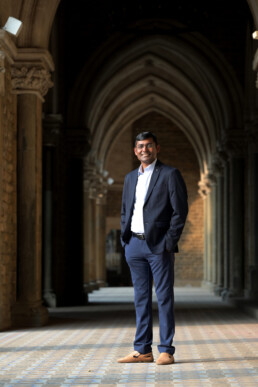
Dr. Ram Savani is the Managing Director of Savani Heritage Conservation and one of the leading figures in the field of heritage restoration and conservation in India today. A civil engineer by education and a conservationist by passion, he represents a rare blend of technical expertise, visionary leadership and deep respect for India’s cultural legacy. Honoured with a Doctorate in Conservation from IEMS, Dr. Savani has dedicated more than two decades of his life to preserving India’s architectural heritage through scientific conservation practices, traditional craftsmanship and sustainable restoration methodologies.
Coming from a family deeply connected with craftsmanship and conservation, Dr. Ram Savani transformed inherited traditional knowledge into a professionally managed and nationally respected conservation enterprise. Under his leadership, Savani Heritage Conservation has emerged as one of India’s most recognized heritage conservation organizations, known for handling highly complex and historically significant restoration projects across the country.
Today, the organization has successfully restored and conserved more than 400 monuments and heritage structures across 22 states and union territories of India. The company’s work spans forts, palaces, temples, churches, colonial-era structures, museums and culturally significant heritage sites. What makes this achievement remarkable is not only the scale of work, but also the diversity of architectural styles, materials and conservation challenges addressed over the years.
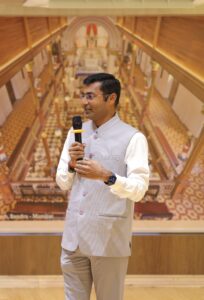
Among the most iconic projects executed under Dr. Savani’s leadership is the restoration of the historic Cellular Jail in the Andaman & Nicobar Islands, one of India’s most emotionally significant freedom movement landmarks. The company has also undertaken restoration works at Mumbai’s celebrated Rajabai Clock Tower, a UNESCO World Heritage structure admired globally for its Gothic architectural excellence.
Another major contribution has been the conservation works associated with the Sabarmati Ashram in Ahmedabad, a place deeply linked to Mahatma Gandhi and India’s independence movement. The project focused on preserving the emotional, architectural and historical authenticity of one of the nation’s most sacred landmarks.
Under his guidance, the organization has also worked on the restoration of Pratapgad Fort in Maharashtra, one of the most historically important forts associated with Chhatrapati Shivaji Maharaj. In addition to this, the company has restored more than 20 iconic temples across Maharashtra, reviving traditional lime technologies, indigenous materials and heritage craftsmanship techniques that are slowly disappearing in modern construction culture.
In Chennai, the restoration of the historic Victoria Public Hall stands as another example of Dr. Savani’s commitment toward preserving India’s architectural legacy. The company has also contributed to conservation works at Sanskar Kendra in Ahmedabad, designed by the legendary architect Le Corbusier. These projects reflect the organization’s capability to work across varied architectural periods while maintaining historical integrity and authenticity.
Under Dr. Ram Savani’s leadership, Savani Heritage Conservation has earned 12 UNESCO awards and more than 65 national and international recognitions for excellence in conservation and restoration. Among the most prestigious honours received are the Mahatma Gandhi Samman Award at the House of Commons in London and the Jewel of India Award at the United States Capitol.
Recently, Savani Heritage Conservation created history on national television through Shark Tank India, where the company secured the highest revenue deal of the season. This milestone brought unprecedented recognition to the heritage conservation industry and demonstrated how cultural preservation can also become a symbol of innovation, entrepreneurship and national pride.
What truly distinguishes Dr. Ram Savani is the philosophy with which he approaches conservation. For him, heritage restoration is not merely about repairing structures, it is about reviving identity, preserving collective memory and safeguarding the wisdom of generations.
The organization operates on strong core values personally championed by Dr. Savani: Client Centricity, a Solution-Based Approach, Impact-Focused Leadership, Commitment and Accountability, and the preservation of Historic Authenticity. He strongly advocates for like-to-like restoration methods, traditional materials and conservation practices that preserve the true essence of historic structures.
Beyond engineering and conservation, Dr. Ram Savani is also a student of Indian philosophy, Western philosophy and the Bhagwat Geeta. His philosophical understanding adds a deeper dimension to his work, reminding people that monuments are not merely buildings, but symbols of identity, wisdom and civilization.
Today, Dr. Ram Savani continues to lead with an ambitious vision to restore monuments across every state of India and contribute toward making India the heritage tourism hub of the world. Through conservation, research, training and awareness, he aims to ensure that India’s historic legacy continues to inspire future generations with pride and purpose.